The AI Marketing Stack That Actually Works: Build Your Unfair Advantage
Discover how to build an integrated AI marketing stack that automates your entire funnel—from strategy to nurture sequences—and creates compounding results.

Introduction: From Scattered Tools to Seamless Automation
Remember when marketing meant mastering one or two channels? Those days are long gone. Today's businesses juggle email platforms, social media schedulers, content creation tools, video editors, and lead capture systems—often paying for each separately while watching them fail to communicate with each other.
The result? Fragmented workflows, duplicated efforts, and marketing that feels more like a part-time job than a growth engine.
But what if you could replace that entire scattered toolkit with one integrated AI marketing stack that handles everything from strategy to nurture sequences? Not just individual tools strung together, but a connected system where each component amplifies the others?
That's the unfair advantage modern businesses need—and it's more achievable than you think.
The Evolution: Why Your Old Marketing Stack Is Costing You
The Manual Marketing Era (And Why It's Dying)
For decades, the marketing playbook was straightforward: hire experts, create content manually, send emails, hope something sticks. This approach worked—but it came with massive trade-offs.
Time: Weeks to develop a strategy, months to produce quality content
Cost: Agency fees or full-time salaries that only larger companies could afford
Expertise: You needed specialists for every channel—copywriters, designers, video producers, email strategists
Consistency: One person's vacation could derail your entire pipeline
For solopreneurs and small business owners, this model was simply impossible.
The Point Solution Trap
As tools proliferated, businesses tried to solve this by mixing and matching: a CRM here, an email platform there, a social scheduler, a content tool, a video editor. Each solved one problem well.
But they didn't talk to each other.
Your email platform didn't know who visited your landing page. Your video tool didn't integrate with your social scheduler. Your content ideas weren't informed by your sales data. You ended up with 10+ subscriptions, fragmented workflows, and marketing that felt disjointed to your customers.
The promise was flexibility. The reality was chaos.
The AI Marketing Stack Revolution: Integration Changes Everything
What Makes an AI Marketing Stack Different?
An integrated AI marketing stack isn't just a collection of AI tools—it's a connected system where each component feeds intelligence to the others. Think of it less like a toolbox and more like a nervous system.
Here's what transforms a scattered toolkit into a true stack:
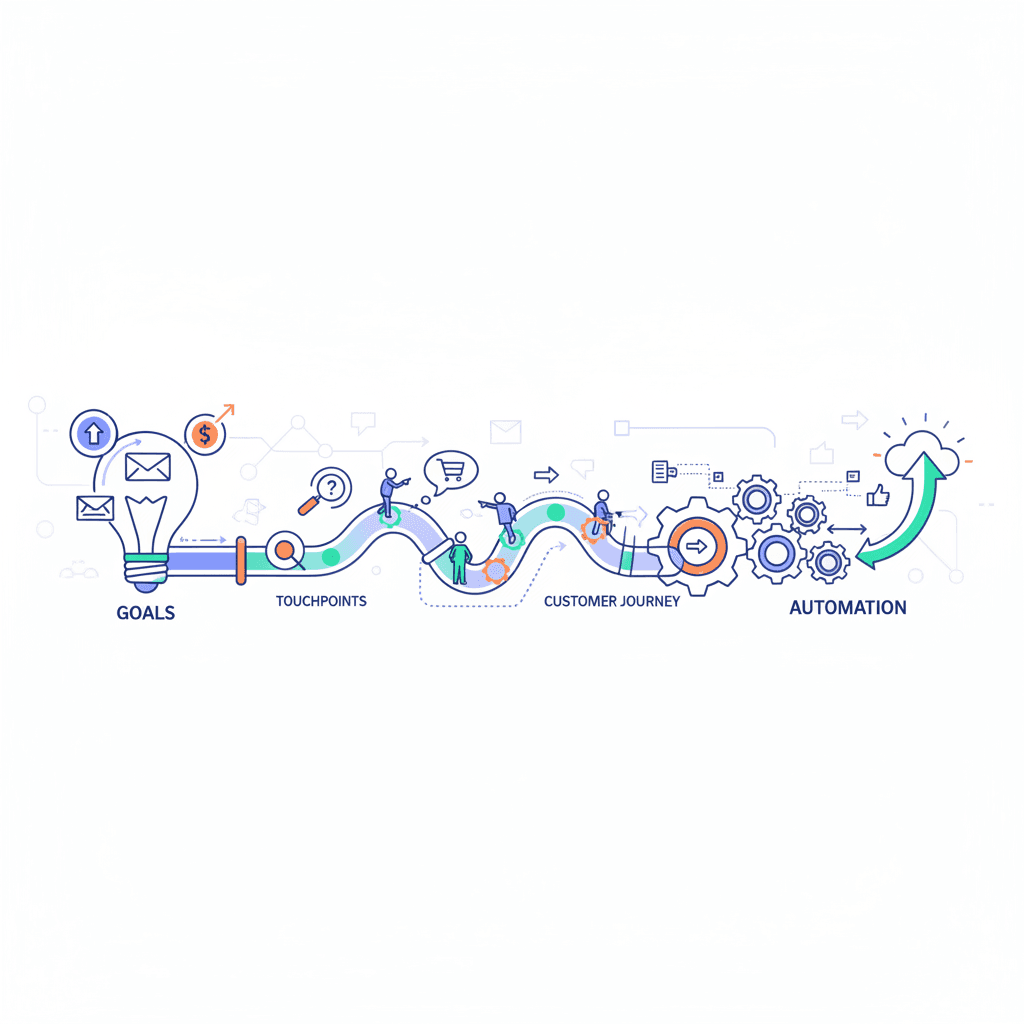
Unified data flow: Information moves seamlessly from your website analysis to strategy to content to lead capture to email sequences
Contextual intelligence: Each tool understands what came before it, enabling smarter decisions at every stage
Compounding results: The more data flows through the system, the smarter it becomes
Reduced friction: No manual data entry between systems, no lost context, no broken handoffs
The Complete AI Marketing Funnel
A properly built AI marketing stack handles your entire customer journey in an integrated way:
Stage 1: AI-Powered Strategy
It starts with analysis. Your AI stack examines your website, industry, competitors, and business goals to generate a customized marketing strategy—not a template, but a plan specific to your business. This strategy becomes the blueprint for everything that follows.
Stage 2: Content Generation
With your strategy defined, the system generates relevant, high-quality content across multiple formats. Blog posts, social media captions, email subject lines—all aligned with your strategy and audience. The key difference: it's not random content. It's strategic content informed by your unique business context.
Stage 3: Video Production
Video is no longer optional in marketing—but it's expensive and time-consuming to produce. An integrated AI stack can generate professional-quality video content automatically, synchronized with your written content and strategy. Your message stays consistent across formats.
Stage 4: Lead Capture Optimization
The system analyzes your funnel and creates optimized landing pages, forms, and lead magnets designed to convert. Because it understands your strategy and audience, these aren't generic—they're tailored to your specific business and market.
Stage 5: Email Sequences & Automation
Blog illustration for section about The AI Marketing Stack Revolution: Integration Changes Everything What Makes an AI Marketing Stack D
Leads flow automatically into nurture sequences tailored to their behavior and interests. The system learns from engagement data and continuously optimizes. Your follow-up is personalized, timely, and effective—without you lifting a finger after setup.
Why Integration Beats Point Solutions Every Time
The Compounding Effect
Here's the mathematical advantage of an integrated stack: each component doesn't just work—it makes the others work better.
When your email platform knows what content each lead engaged with, it can send smarter follow-ups. When your lead capture system understands your strategy, it attracts higher-quality prospects. When your content is informed by your sales data, it addresses real objections. When your video is synchronized with your written messaging, impact multiplies.
This is compounding. 1 + 1 doesn't equal 2—it equals 5.
The Cost Advantage
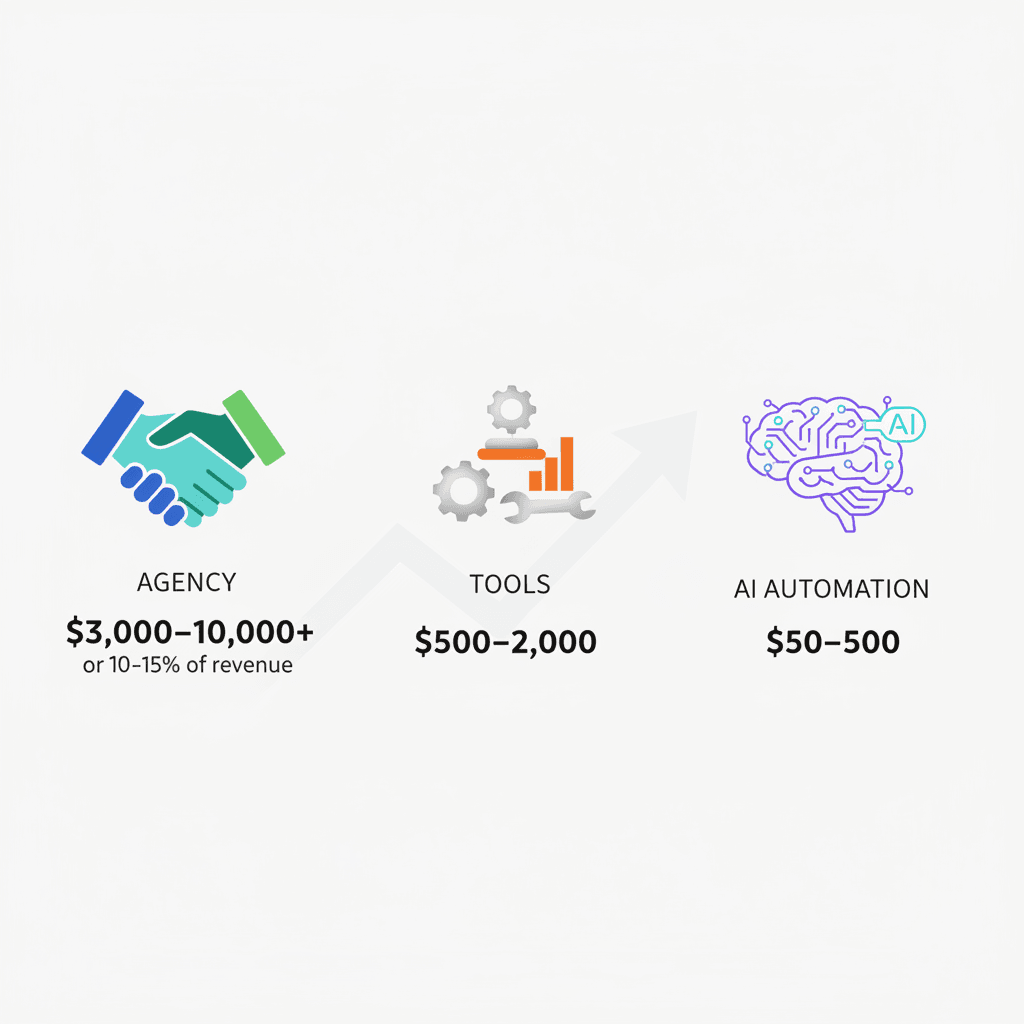
Most businesses pay $500-$2,000+ monthly for separate tools: email ($300), CRM ($100), social scheduler ($200), content tool ($200), video tool ($300), landing page builder ($150)... the list goes on.
An integrated AI marketing stack consolidates this into a single, unified platform—often at a fraction of the cost. More importantly, you're not paying for overlapping features or unused tools. Every dollar goes toward capabilities you actually need.
The Time Advantage
Marketing automation saves time, but integration saves even more. Without manual data transfer between platforms, without rebuilding strategies in different tools, without context switching—you reclaim hours every week. Hours you can reinvest in your actual business.
Building Your Stack: The Right Way
Start with Strategy, Not Tools
The biggest mistake businesses make: they pick tools first, then try to fit their strategy to them. Do the opposite. Let AI generate your strategy first, then let the platform implement it across all your marketing channels.
Prioritize Integration Over Features
When evaluating an AI marketing stack, ask: "Do these components work together, or are they just bundled?" True integration means data flows seamlessly, insights compound, and automation chains work end-to-end.
Measure What Matters
An integrated stack gives you something scattered tools never could: complete visibility into your marketing funnel. Track these key metrics:
Lead quality: Are your automated sequences attracting better prospects?
Conversion velocity: How fast are leads moving through your funnel?
Cost per acquisition: What's your actual customer acquisition cost across the entire stack?
Engagement by content type: Which AI-generated formats drive the most action?
Automation efficiency: How much time are you actually saving month-over-month?
The Unfair Advantage Is Waiting
Your competitors are still juggling 10+ tools, paying agencies, and manually managing marketing workflows. Meanwhile, you could be running a sophisticated, integrated AI marketing machine that generates strategy, creates content, produces video, captures leads, and nurtures prospects—all automatically.
The difference isn't talent or budget. It's architecture. A connected system always outperforms scattered pieces.
The question isn't whether AI marketing stacks are the future. They are. The question is: when will you build yours?
Ready to see how an integrated AI marketing stack could transform your business? Start by analyzing your current marketing setup and identifying the gaps an integrated platform could fill. Your unfair advantage is waiting.

Blog illustration for section about 1 + 1 doesn't equal 2—it equals 5. Most businesses pay $500-$2,000+ monthly for separate tools: